
Montmorency County Criminal History Checks
No single Montmorency County database can answer every criminal history question. The practical route starts with MiCOURT Case Search. Select the 88th District Court for misdemeanors and the early stages of a felony. Select the 26th Circuit Court for a felony after bindover, which is the transfer from District Court to Circuit Court. MiCOURT accepts a participant name or case number, but its online entry is informational. The court file remains the official source for a register of actions, charging paper, judgment, sentence, or certified copy.
Bring a full legal name, date of birth when known, spelling variants, an incident or case number, and an approximate date. Then match the search channel to the record. A same-name result must be checked against other identifiers. A missing online result can reflect a protected case, an older file, suppression, a display limit, or a reporting lag rather than proof that no event occurred.
- Search both relevant Montmorency County courts in MiCOURT when a felony may have moved from District to Circuit Court.
- Write down the case number, charge level, filing date, status, and disposition shown for the correct person.
- Call the court clerk for the official record and ask about older files, copies, certification, and the clerk's preferred request method.
- Request the incident or arrest narrative from the law-enforcement agency that created it, not from the court.
- Use ICHAT for qualifying statewide Michigan history, then reconcile that result with the court's final disposition.
The official Montmorency County page shows the county building and court contacts used in that path.

The captured county page helps distinguish the court and clerk route from the separate sheriff records route.
Four Montmorency County Record Custodians
A report, booking entry, court file, and ICHAT result describe different stages. The Montmorency County Sheriff or another investigating agency writes the incident record. The Alpena County Correctional Facility keeps the current booking and custody information for a person housed there. Montmorency County courts document filed charges and their outcomes. Michigan State Police then compiles qualifying reported state history through the Criminal Justice Information Center.
The flow is simple to state but easy to miss: Incident or arrest report → Alpena booking and custody entry → 88th District Court complaint → 26th Circuit Court after felony bindover → disposition reported to Michigan State Police. A prosecutor may authorize charges that differ from the arrest offense. A court may dismiss a count. Those changes explain why an early booking entry and a later repository result may not match word for word.
| Record | Montmorency channel | Best use |
|---|---|---|
| Incident or arrest report | Originating sheriff, MSP, or DNR office | Event narrative and arrest basis |
| Booking or custody | Alpena holding facility | Current hold, bond, and release route |
| Court case | 88th District or 26th Circuit clerk | Filed charges, hearings, and final result |
| State history | MSP ICHAT | Qualifying public Michigan history |
Note: A dismissal can appear in the court file even when no public conviction entry appears in ICHAT.
Official Background Checks in Michigan
The Michigan State Police criminal-history service explains two distinct official routes. ICHAT is a public name and date-of-birth search. It currently costs $10 and reports qualifying Michigan felonies and serious misdemeanors punishable by more than 93 days. It does not include warrants, federal or tribal cases, traffic matters, juvenile files, local misdemeanors, records from other states, or suppressed entries. “No record” therefore means no matching public result within ICHAT's coverage.
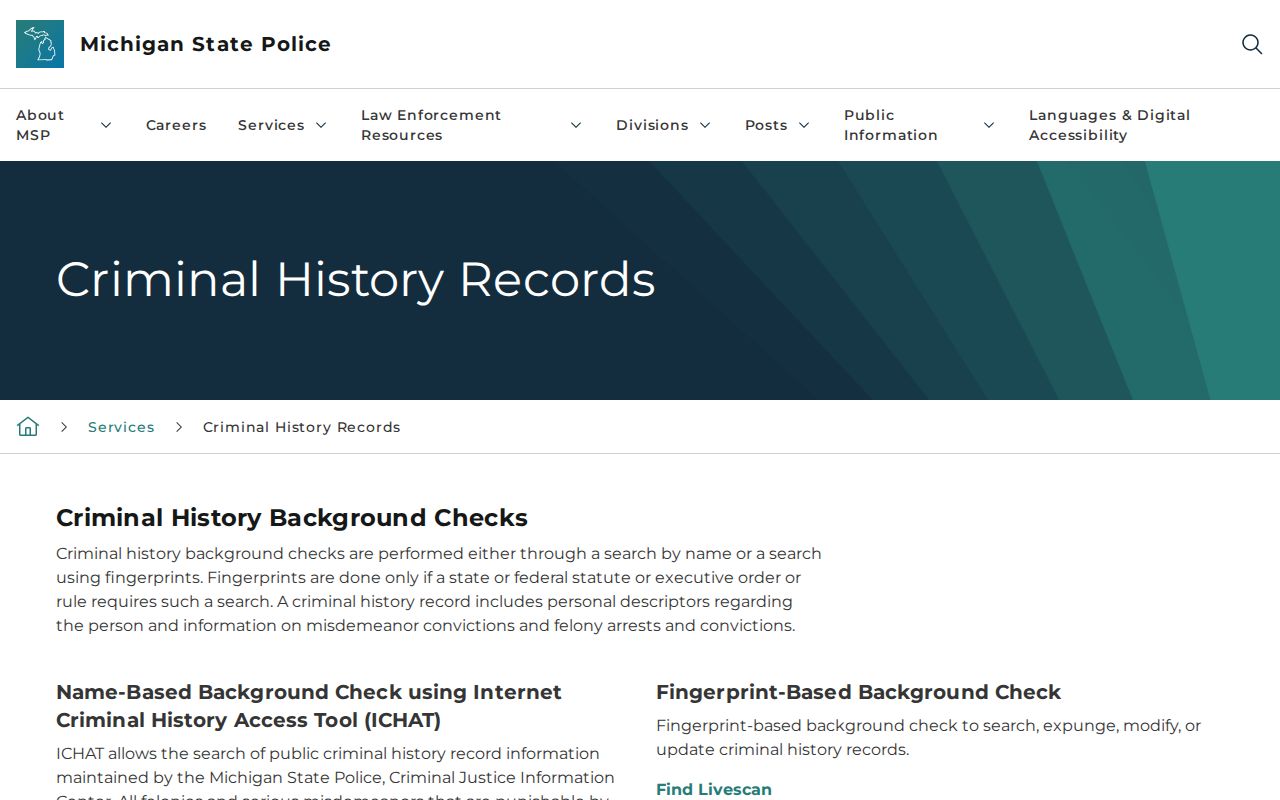
The state guidance shown here is the source for ICHAT coverage and its major exclusions.
For a person reviewing their own identity-based history, fingerprints provide a stronger match than a name alone. The Montmorency County Sheriff takes appointment-only fingerprints on weekdays from 8:30 a.m. to 3:30 p.m. Call 989-785-4238, option 2. Local law-enforcement Live Scan sites and MSP-approved vendors also serve Michigan processes. An FBI Identity History Summary is a separate subject-only federal product and requires fingerprints. It does not replace the Montmorency County court file.
Montmorency County Criminal Records on M-32
Montmorency County's main records offices are close on the M-32 corridor in Atlanta, yet they have different legal duties. The county building at 12265 M-32 holds the County Clerk, the 26th Circuit Court files, and the 88th District Court. The general building hours are Monday through Friday, 8:30 a.m. to 4:30 p.m., except posted holidays, though court hours may differ. The sheriff is west at 11045 M-32 West and handles its own reports, FOIA requests, and fingerprint appointments.
The county personnel directory is a useful source before a call or trip because it identifies the office tied to a specific public record.
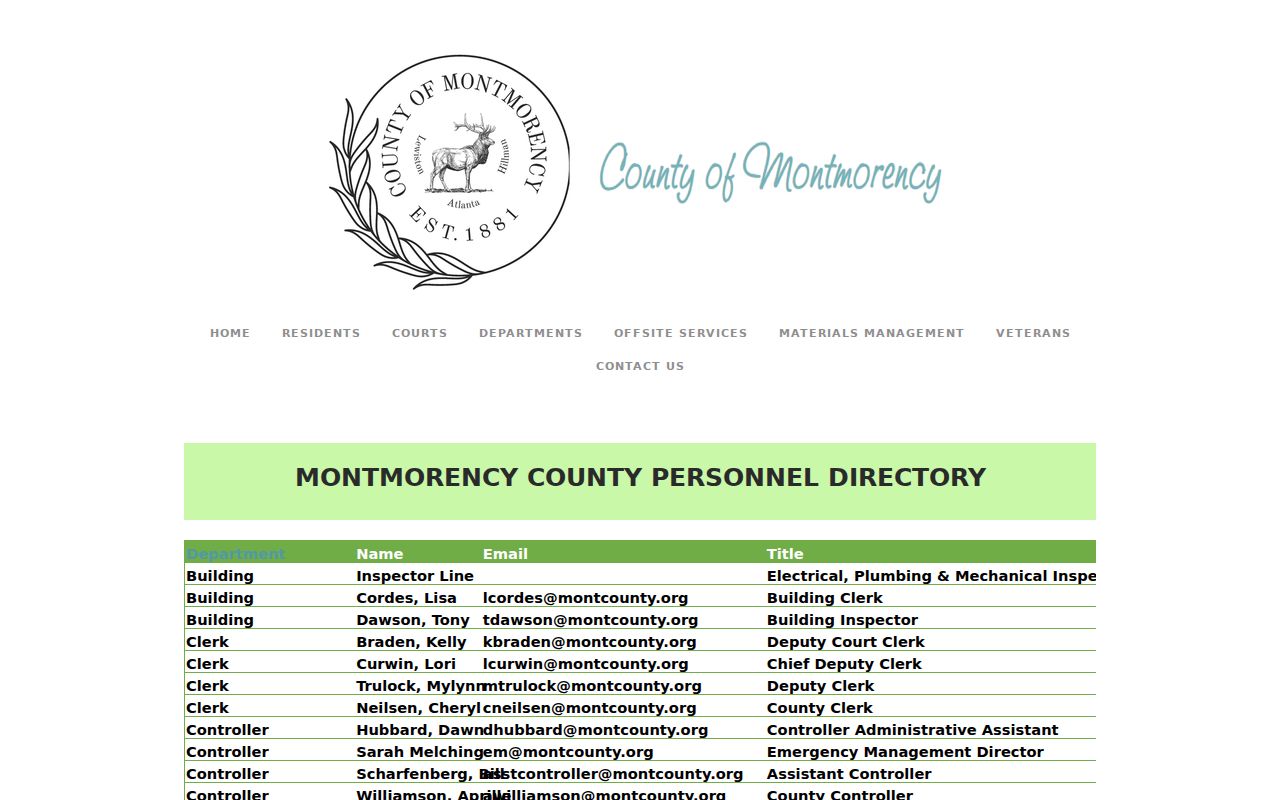
The directory image reinforces why a request should be sent to the clerk, court, prosecutor, or sheriff that actually maintains it.
County Courts and Clerk
12265 M-32, P.O. Box 789
Atlanta, MI 49709
989-785-8000
Sheriff Records Department
11045 M-32 West
Atlanta, MI 49709
989-785-4238
88th District Court
12265 M-32, P.O. Box 789
Atlanta, MI 49709
989-785-8035
Kinds of Criminal Records
Montmorency County criminal records are defined by who created them and what stage they capture. An incident report describes a reported event and the agency response. A booking record covers intake, the initial charge, bond, and release status. The court register tracks hearings and the final disposition. ICHAT is a filtered state compilation. OTIS is limited to certain Michigan prisoners, parolees, probationers, and people discharged from supervision within its stated period.
Warrants need their own route. Montmorency County has no verified public active-warrant database, and ICHAT expressly excludes warrants. A person checking their own status should contact the issuing court or sheriff, identify the case, ask what appearance or bond instruction is recorded, and confirm any later clearance with both offices. Sealed, juvenile, search, and operational warrants are not public name-search records.
- Police records preserve an agency's incident or arrest account, subject to redaction.
- Booking records show custody intake and can list charges that later change.
- Court records identify filed counts, case events, dispositions, and sentences.
- Corrections records describe qualifying prison or supervision status, not every county-jail stay.
- Registry records are a separate statutory public-safety system, not a general rap sheet.
A detailed Montmorency County arrest search follows the sheriff, Alpena custody, court, and ICHAT fallback chain without treating an arrest as a conviction.
Montmorency County Jail Records Cross Borders
Montmorency County does not operate the public jail roster that many readers expect. The official sheriff jail page routes county detainees to the Alpena County Correctional Facility. That means one event can create a Montmorency County sheriff report, an Alpena custody record, and a Montmorency County court case. Calling only one office may answer only one part of the question.
The Montmorency County Sheriff website is the local starting point for reports, custody routing, and records contacts.
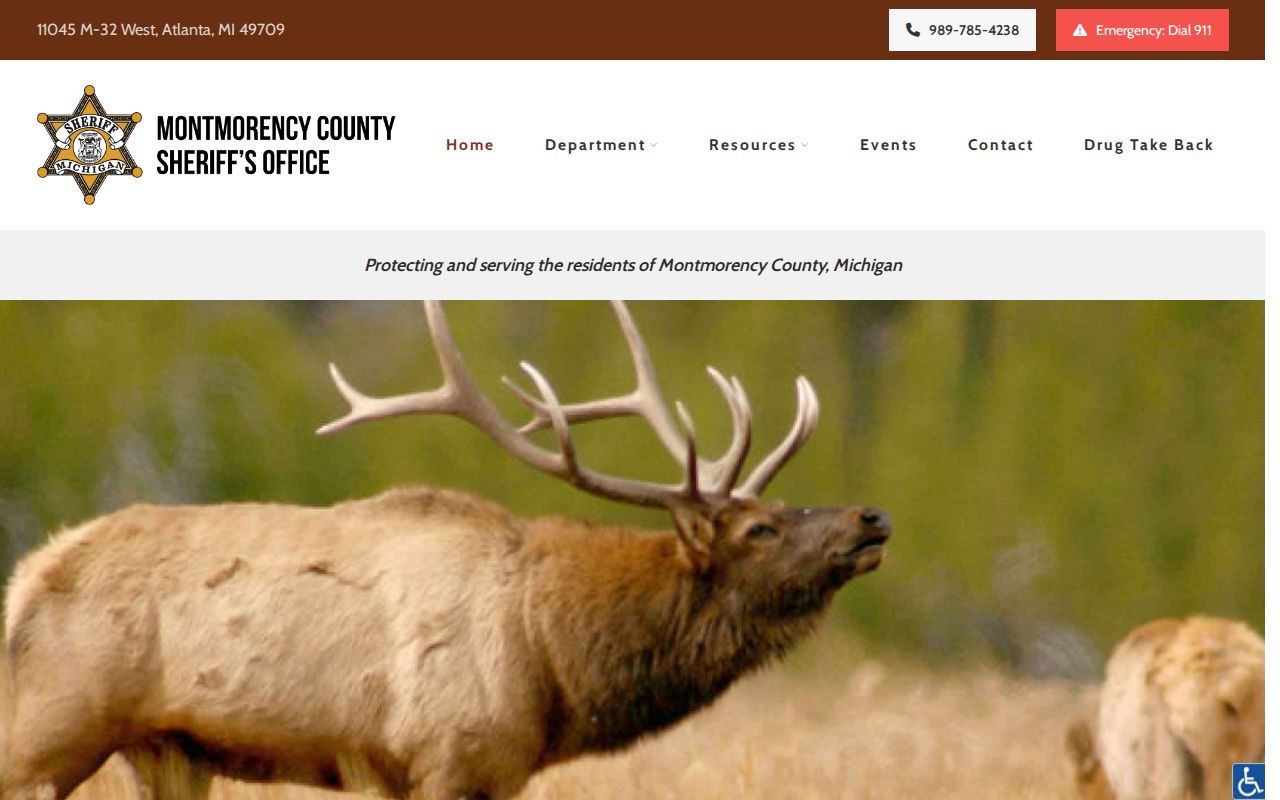
The sheriff page is the official bridge between a local arrest record and the out-of-county holding channel.
Use Alpena's official facility instructions for current custody, calls, visits, deposits, and release information because policies and vendors can change. Use the 88th District Court for the bond order. OTIS is not a substitute for this check. It excludes county jails, city lockups, unsentenced arrestees, jail-only sentences, exempt entries, and people outside its published supervision window.
Note: VINELink coverage should be confirmed against the actual Alpena booking rather than assumed from the arrest location.
Montmorency County Criminal Records: What They Contain
A Michigan criminal-history entry usually starts with identity descriptors and then groups arrest cycles by date and agency. It can show original charges, the reporting court, a disposition, a sentence, and custody or supervision data. The public ICHAT product is filtered. A Montmorency County court file adds hearing events and docket details, while the booking entry adds intake facts that may not belong in the final court judgment.
Read the procedural posture before using a label. “Charged” is not “convicted.” A pending count has no final result. A dismissal ends a charge without conviction, while an acquittal follows a not-guilty verdict. A portal can also lag behind the official file. The clerk's record controls when exact wording matters.
| Name and identifiers | Legal name, aliases, date of birth, descriptors, and fingerprint-linked identifiers where authorized. |
|---|---|
| Arrest and booking | Agency, dates, original offenses, booking site, holds, bond, and release facts. |
| Charges and statutes | Count descriptions, Michigan Compiled Laws citations, and charge level. |
| Disposition | Pending, dismissed, acquitted, or convicted result for each filed count. |
| Sentence | Public sanctions imposed after a conviction, including custody or supervision. |
| Case events | Arraignment, probable-cause conference, preliminary examination, plea, trial, and sentencing dates. |
Montmorency County Criminal Record Fees
Published costs depend on the product. ICHAT charges per name search. The FBI charges for a subject's Identity History Summary. Montmorency County Sheriff fingerprint prices vary by the stated purpose. A sheriff FOIA request can also carry fees, but the local page does not publish a flat report-copy schedule. Ask for a written estimate and request inspection or electronic delivery when that may reduce cost.
| Official product or service | Published fee | Main limit |
|---|---|---|
| ICHAT public Michigan search | $10 | Filtered Michigan history; no warrants or out-of-state records |
| Local CPL fingerprints | $20 | Capture service, not the criminal-history result |
| Listed school volunteer fingerprints | $50 | Purpose-specific agency process |
| Other listed local fingerprint purposes | $60 | Proper agency code or form required |
| MSP set-aside processing | $50 | Separate court documents or copy costs may apply |
| FBI direct identity summary | $18 | Subject-only and fingerprint based |
| Sheriff report or FOIA record | Variable | Depends on the requested material |
Michigan Public Access Laws
Michigan FOIA creates a broad policy of access to government information, but it does not make each part of every police file public. A written request normally receives a response within five business days, and the agency may use the statutory extension. A response can grant, deny, partly grant, seek clarification or a deposit, or extend its response time. It is not a promise that all requested records will arrive within five days.
Active-investigation details, confidential sources, investigative methods, safety-sensitive facts, juvenile information, victim details, medical data, and private identifiers may be withheld or redacted. FOIA also does not replace the court's process for certified judgments. Ask the Montmorency County clerk for court-created records and Sheriff Records for sheriff-created reports.
Key Michigan laws:
MCL 15.231 states Michigan's public-access policy.
MCL 15.235 sets the public body's response options and general five-business-day period.
MCL 15.243 authorizes specified privacy and law-enforcement exemptions.
MCL 28.242 directs MSP to collect criminal-history and biometric information.
MCL 780.621 through 780.623 govern set-aside eligibility, effects, and retained nonpublic records.
Montmorency County FOIA Record Requests
The local fallback for a sheriff-created report is a request to Montmorency County Sheriff, ATTN: Records Department, 11045 M-32 West, Atlanta, MI 49709. A requester may pick up and drop off the form at the office or fax it to 989-785-4471. No verified email request portal, fixed certified-copy charge, or routine production time appears on the official page.
The county elected-officials page identifies the current sheriff and clerk whose offices hold different parts of the local record system.
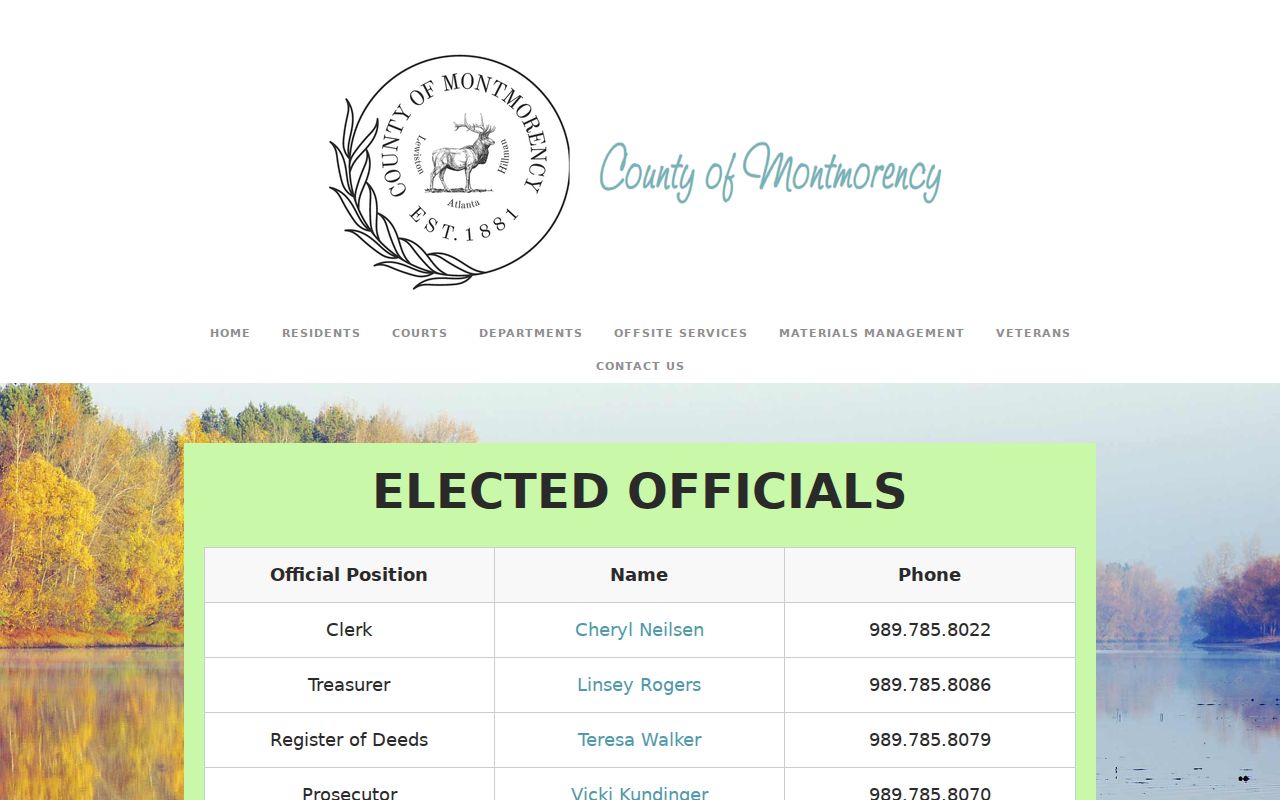
The captured page supports the office roles used to route a report request or a circuit-court file request.
Describe the record with an incident number, date, place, names, and the exact media sought. Ask for an estimate. A request for “all records” may take more search and review time than a request for the public incident report tied to one number. For a certified disposition, bypass FOIA and ask the clerk of the court that entered the judgment.
Restricted, Sealed & Expunged Records
Michigan uses “set aside” as well as “expungement.” Juvenile matters, protected-order files, victim identities in sensitive cases, personal identifiers, active-investigation material, and set-aside records may be absent or redacted. ICHAT omits suppressed and juvenile records. MiCOURT also excludes published protected case types. An empty public search does not reveal which limit applies.
Under Michigan law, eligible convictions may be set aside by application, subject to numerical and offense-based limits. A Montmorency County misdemeanor application returns to the 88th District Court if that court entered judgment. A felony application returns to the 26th Circuit Court. MSP's process calls for the current application, certified court records, RI-008 fingerprints, and the $50 CJIC processing payment. MSP advises allowing eight weeks for its criminal-history work.
Automatic Clean Slate uses statutory waiting periods and limits. Qualifying misdemeanors generally use seven years after sentence. Qualifying felonies generally use ten years after the later of sentence or completion of MDOC imprisonment. Certain offenses are excluded. A person should verify both the court record and ICHAT after an expected automatic set-aside because system timing and eligibility can differ from an assumption.
Montmorency County Trail Incident Records
Montmorency County reports 547.6 square miles of land, 248 lakes and reservoirs, and extensive forest cover. Its ORV, ATV, and snowmobile network shapes which agency may create a local incident record. The sheriff, Michigan State Police, or Michigan Department of Natural Resources may hold the report, depending on the road, trail, conduct, and officer involved. Atlanta and Lewiston do not have city police bureaus, and no independent full-service Hillman police department was verified in the research.
The sheriff's county history provides the geographic and enforcement context behind that multi-agency routing.
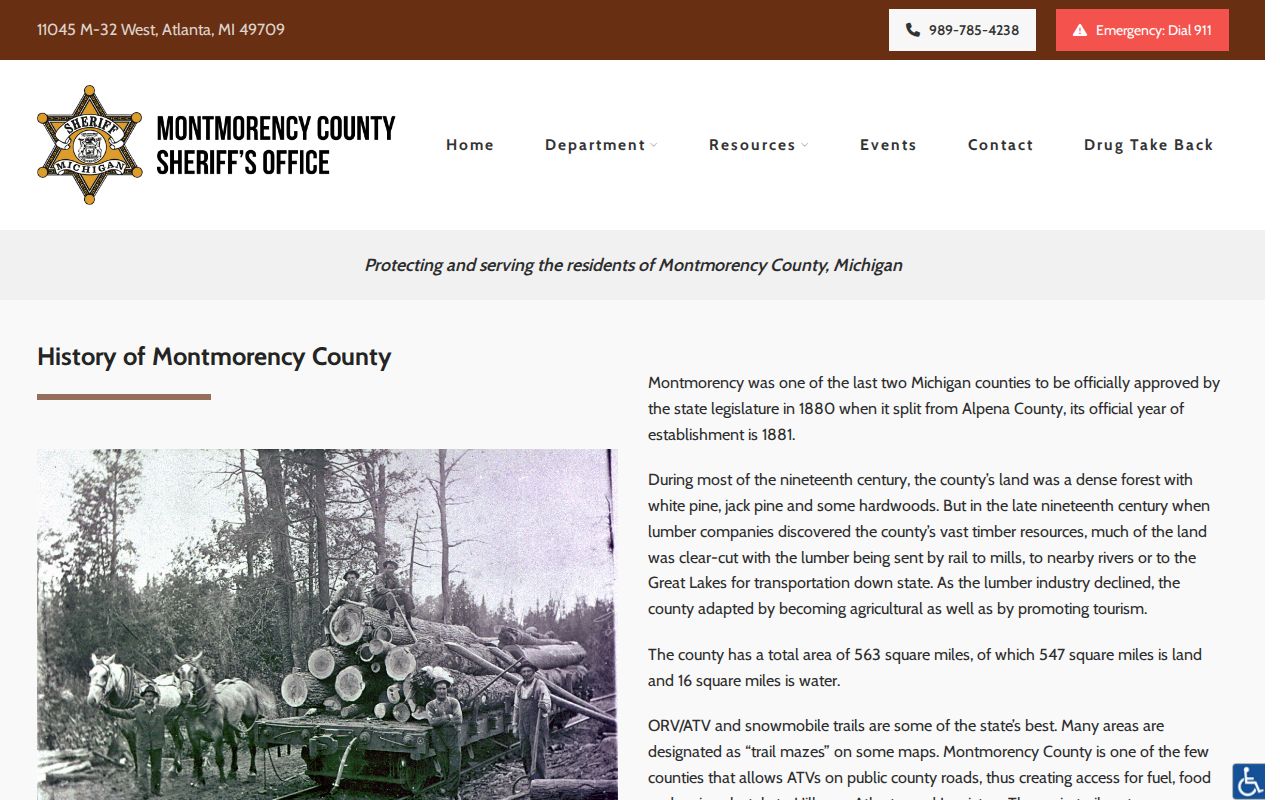
The local history image helps explain why a location and investigating agency are vital clues when seeking an incident report.
Start by asking which agency issued the report number. Send the request to that agency. Then use MiCOURT if a criminal complaint was filed. For current statistical context, consult the official FBI Crime Data Explorer or Michigan State Police reporting tools and note the exact year, agency coverage, and whether the figure counts offenses, arrests, incidents, or clearances.
The FBI Crime Data Explorer is the official dynamic source identified for that check.
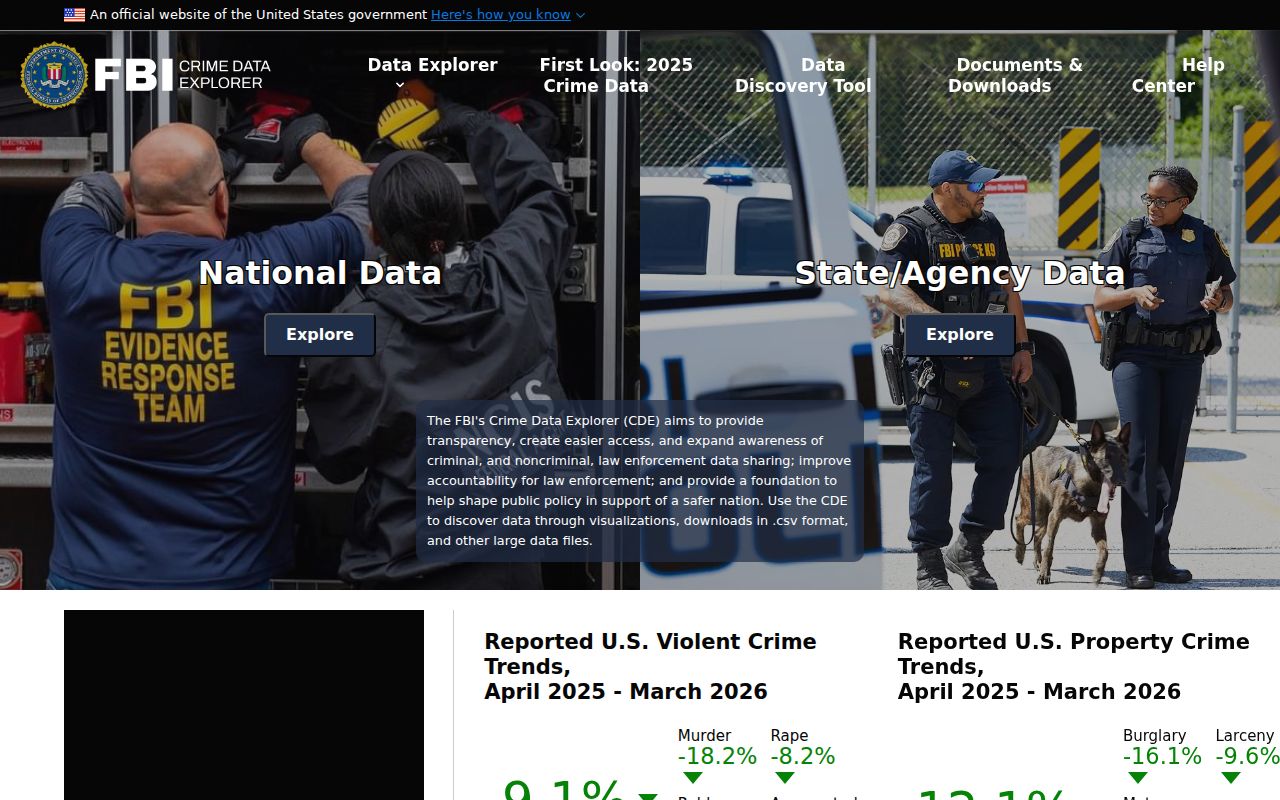
The interface should be read with its year and agency filters because the research did not support a fixed county crime count.
Montmorency County Criminal Record Terms
Short docket labels can conceal large differences. In a Montmorency County felony, the first case steps occur in District Court. A bindover then moves the matter to Circuit Court. That split is why a search under only one court can miss part of the timeline. Use the actual count, statute, and disposition rather than guessing from the case status alone.
Michigan does not use one broad letter ladder for misdemeanors. The offense statute sets the maximum term, often 90 or 93 days, six months, or one year, and the 88th District Court handles those misdemeanor outcomes. Felony sentencing guidelines use Classes A through H, but the charged statute still controls the offense label and maximum. A MiCOURT warning also notes that some attempts under MCL 750.92 can display as felonies even when the governing subsection makes the attempt a misdemeanor. Confirm the statute and official court file before repeating the portal label.
- Arraignment
- The first formal court appearance for charges and bond or release terms.
- Probable-cause conference
- A District Court felony stage before the preliminary examination.
- Bindover
- The transfer of a felony from the 88th District Court to the 26th Circuit Court.
- Register of actions
- The chronological court docket listing filings, hearings, and results.
- Disposition
- The way each filed charge ended, such as dismissal, acquittal, or conviction.
- Probation and parole
- Probation is court-ordered community supervision; parole is supervised release from an MDOC prison term.
For the complete filed count and sentence, the Montmorency County court case lookup explains the two-court path and the clerk's official-copy role.
City-by-City Criminal Records in Montmorency County
These are community guides, not three incorporated-city systems. Atlanta and Lewiston are unincorporated census-designated places. Hillman is the county's only incorporated village. None has a separate municipal criminal court, and the reviewed official sources did not support local police databases for them. The Montmorency County Sheriff, MSP, 88th District Court, 26th Circuit Court, and Alpena custody channel remain the working routes.
Atlanta Record Check
County seat and CDP, with the county courts and sheriff offices along M-32.
Hillman Record Check
Incorporated village whose criminal cases still route through county courts.
Lewiston Record Check
Unincorporated CDP with no city police records bureau or municipal court.